
 Family Cybersecurity
Family Cybersecurity Team
How a team of cybersecurity experts scaled their methodology to families they will never meet, without giving up what they built.
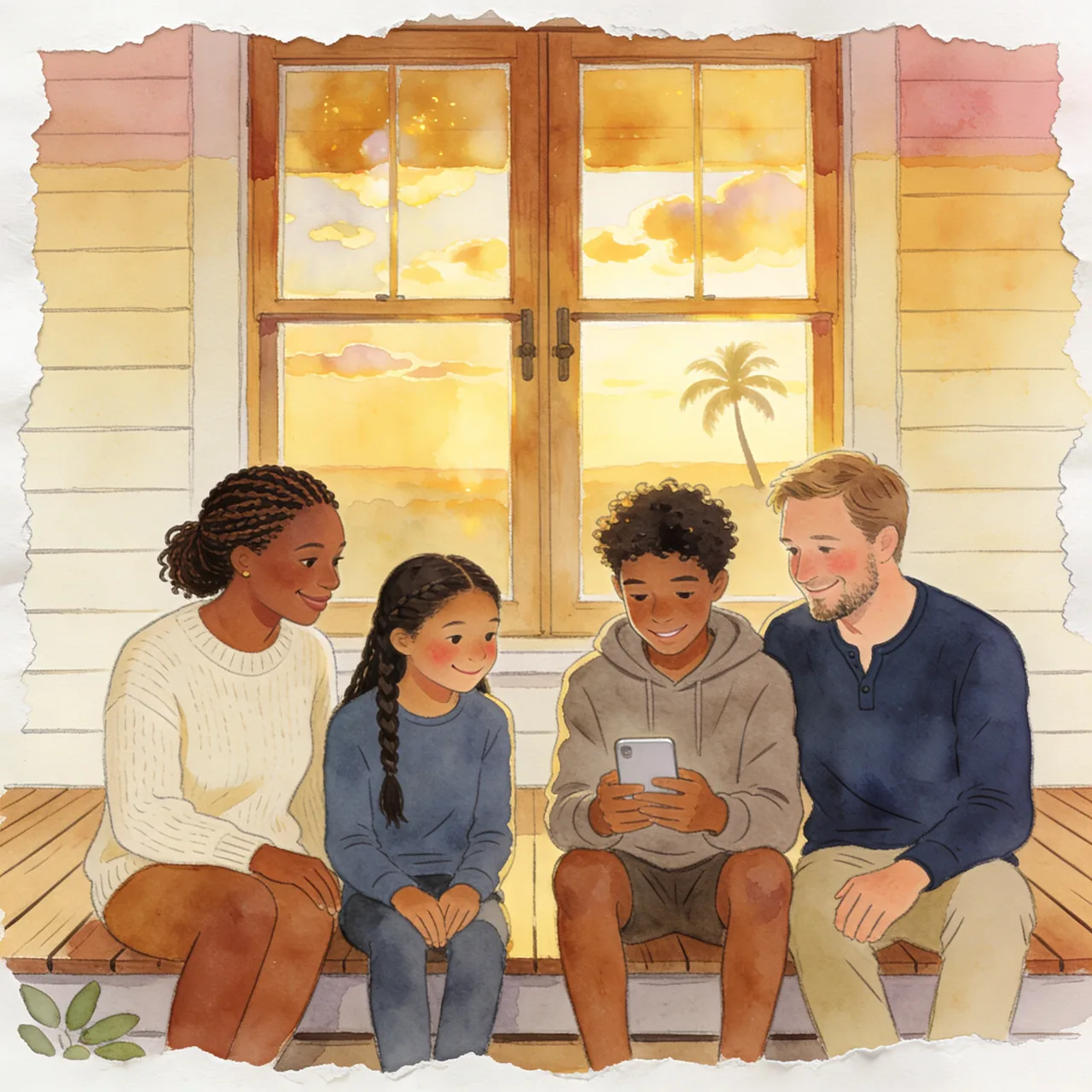
Cybersecurity professionals spend their days defending enterprise networks. Then they go home and watch their own kids navigate the same threats they fight professionally. They know what to do. Most parents don’t. The expertise exists. It just lives behind contracts no household can afford.
The old model
The team tried workshops, community events and one-on-one clinics. Each one helped the families in the room. None of them scaled. Every session required the experts to show up, present and start over with the next group. This is how most expert knowledge reaches the people who need it: one room at a time. The methodology was proven. The reach was limited to whoever could show up that day.
The philosophy
This team sees digital parenting differently. They reject what they call digital dangerism, the instinct to shield children from technology entirely. Their position is that healthy development requires calibrated risk. The digital world should be a place where children practice judgment, ethics and self-regulation. Shielding delays competence. Scaffolded exposure builds it.
That is a methodology, not a warning. It requires walking parents through their specific household, their devices, their children’s ages and habits. It requires nuance, and nuance is exactly what does not scale through workshops and pamphlets.
What they built on Asyncwork
Instead of one workshop repeated endlessly, they built a library of focused programs:
- The Engagement and Attention Industry. How apps, games and social networks use hooked design principles, and why children behave the way they do online.
- Youth Cybercrime Recruitment Defenses. How young people are targeted through gaming, social media and encrypted chats, with strategies families can use right away.
- Generative AI for Families. The risks of generative AI services, and concrete steps to limit data exposure without banning the technology.
- Foundational Cybersecurity. Secure networks, phishing recognition, privacy settings and safe internet practices.
What changed
A parent in a rural district without a single cybersecurity professional nearby gets the same quality guidance as a family sitting across the table from the experts. The team still runs live workshops and one-on-one clinics for families who want direct engagement. But the programs extend their reach to families they will never meet in person.
The methodology that used to require a room now only requires an internet connection.
What they kept
The programs belong to the team. Their frameworks, their original concepts, their scaffolded approach, all delivered through a platform that does not extract their IP or repackage it under someone else’s brand. The footer on their site reads “powered by Asyncwork.”
What this means
This team proved that expert methodology can reach a consumer audience without diluting the expertise or requiring the expert to be present for every interaction. The programs don’t replace the experts. They extend them.
The future of expertise is not one all-knowing AI. It is many distinct experts, each with a model that belongs to the person who built the knowledge.
Want to build your own? Become an Advisor.
Become an Advisor
Turn your expertise into an AI model you own. Tell us about your work and we'll be in touch about advisor onboarding.